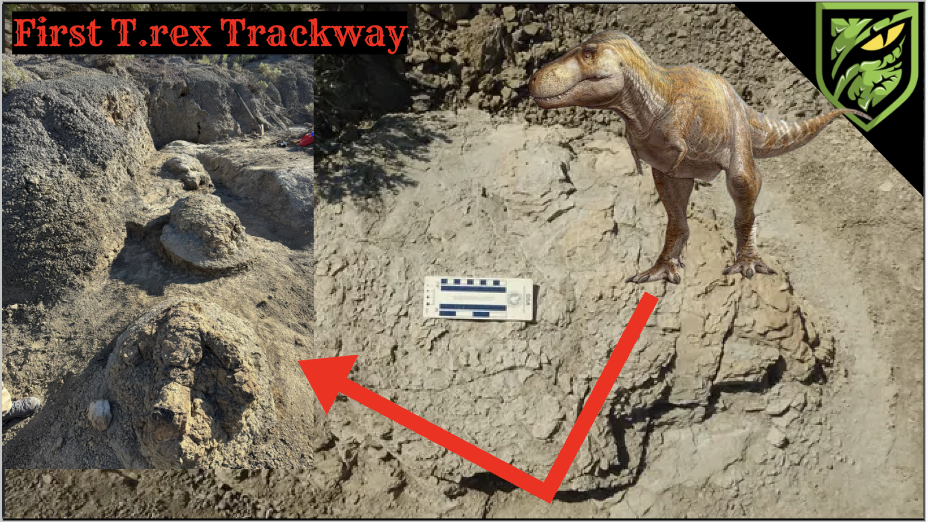
For the first time, paleontologists may have found a trackway made by an adult Tyrannosaurus rex! 🦖👣
Discovered in the Hell Creek Formation of southwestern North Dakota, this remarkable trackway preserves four connected three-toed footprints, each roughly 1 meter (3 feet) long. The trackway stretches for about 7 meters (23 feet) and dates back approximately 66.5 million years.
The trackmaker is believed to have been an adult Tyrannosaurus rex based on the size and morphology of the footprints, their geological age and location, and the presence of T. rex fossils in the same formation. However, as with any fossil trackway, the identification is not absolutely certain.
What’s even more fascinating is what these footprints can tell us about how T. rex actually moved.
The trackway suggests the animal was walking at an estimated speed of around 1.5–2 meters per second — roughly 3.4–4.5 miles per hour.
Fossil bones can tell us what an animal looked like.
Fossil footprints can tell us what that animal was actually doing.
In this episode, we’re taking a look at this incredible trackway and what it can tell us about the movements of the King of the Dinosaurs!
🦖 Four connected footprints 👣 Roughly 3-foot-long tracks 🌎 Hell Creek Formation ⏳ About 66.5 million years old 🚶 Estimated walking speed of 3.4–4.5 mph 🔬 Why trackways are so important for understanding dinosaur behavior
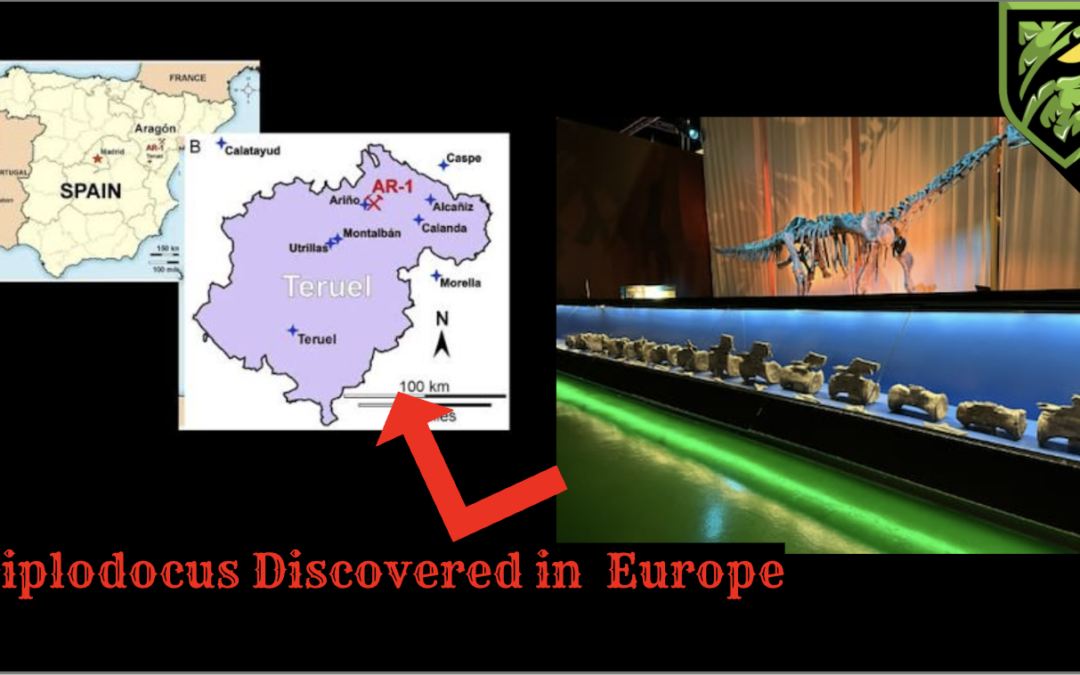
A dinosaur we thought was exclusively North American has now been found in Spain! 🦕🇪🇸
Paleontologists have identified fossils from the La Tejería site near El Castellar in Teruel, Spain, as belonging to Diplodocus — making this the first confirmed evidence of Diplodocus outside North America!
The fossils include 14 tail vertebrae and several chevrons, dating to roughly 150 million years ago during the Late Jurassic. The animal is estimated to have reached around 25 meters (82 feet) in length.
But this discovery isn’t just about finding Diplodocus in a new country. It raises some fascinating questions about how dinosaurs were able to move between North America and Europe during the Late Jurassic, when the continents were already separating.
In this video, we’re taking a look at:
🦕 The discovery of Diplodocus in Spain 🦴 What fossils were actually found 🌎 How Diplodocus could have reached Europe 🗺️ What this tells us about Late Jurassic geography 🦖 The dinosaur ecosystems of Jurassic Spain 🔬 Why this discovery changes our understanding of Diplodocus’ distribution
📄 READ THE SCIENTIFIC PAPER:
Sánchez-Fenollosa, S., García-Cobeña, J., & Cobos, A. (2026). “Intercontinental evidence of the iconic genus Diplodocus Marsh, 1878 (Dinosauria, Sauropoda).” Journal of Vertebrate Paleontology.
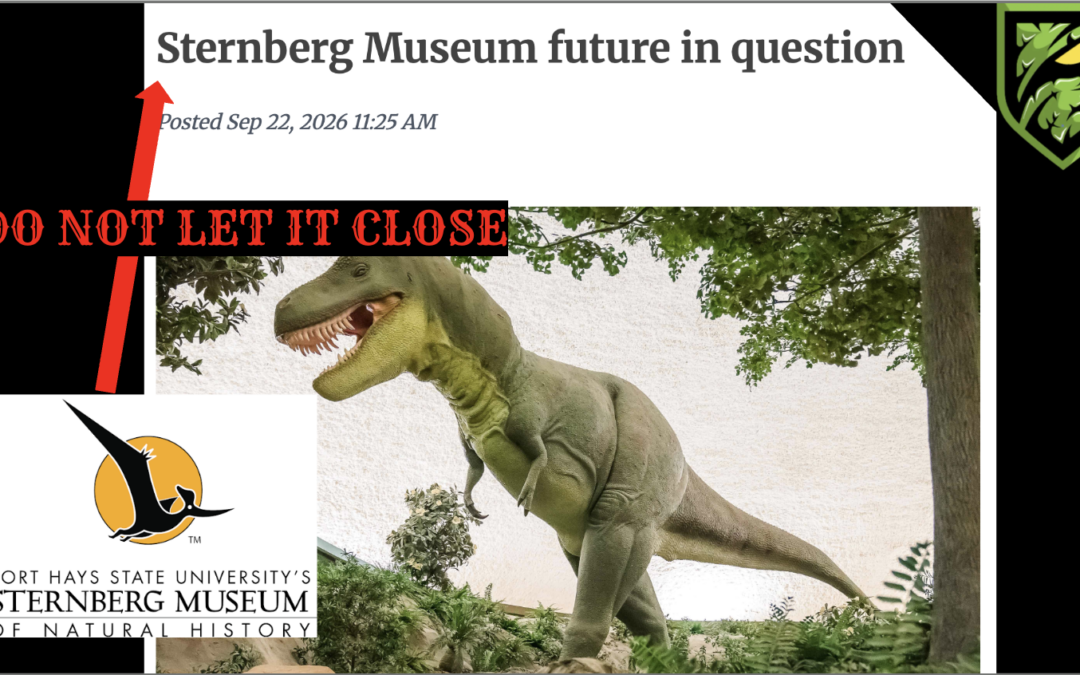
🏛️ WE HAVE TO STAND UP FOR OUR NATURAL HISTORY MUSEUMS.Another natural history museum is facing an uncertain future.According to a September 22, 2026 report from the Hays Post, an employee of the Sternberg Museum of Natural History in Hays, Kansas, announced that the museum would close at the end of the year. However, Fort Hays State University has not officially announced a closure, and university officials say the institution is facing difficult decisions following a $2.4 million reduction from the Kansas Legislature.And regardless of what ultimately happens with Sternberg, I think this is something the entire natural-history community needs to pay attention to.Because we’ve seen this happening again and again.Natural history museums are incredibly important places. They preserve fossils, specimens, scientific collections, and the history of life on Earth—but they’re also places where people discover science for the first time.A kid walks into a dinosaur hall and becomes fascinated with paleontology.A family visits a natural history museum and learns about evolution, geology, biology, and the history of our planet.A student sees a real fossil and decides they want to become a scientist.Those experiences matter.And we cannot take our museums for granted.Earlier this month, the Academy of Natural Sciences of Drexel University announced that its public museum would close at the end of September after nearly two centuries of public operation. The Academy’s collections and research will continue, but the loss of the public museum is still a tremendous change.So this episode is a rallying cry.🦖 GO VISIT YOUR NATURAL HISTORY MUSEUMS.🦴 Buy a ticket.🏛️ Become a member.💰 Donate if you can.🎁 Support the gift shop.👨👩👧 Bring your family.📚 Tell your friends.📱 Share their posts.And if there’s a small local museum near you that you’ve been meaning to visit…GO.Don’t wait until the museum announces that it’s closing to realize how important it was.And if you’re in Kansas or anywhere near Hays, keep an eye on the situation at Sternberg Museum of Natural History and support the museum and its community however you can.This isn’t about blaming the people who work at these museums. In many cases, museum staff are the people working hardest to preserve collections, conduct research, educate the public, and keep these institutions alive.It’s about recognizing that museums need support.And as someone who dreams of creating a natural history and paleontology museum of my own someday, these stories hit especially close to home.I want to see MORE natural history museums.I want to see MORE dinosaur museums.I want to see MORE people getting excited about fossils, geology, biology, and the history of life.I don’t want to watch these institutions disappear.So please:Stand up for your museums.Support them.Visit them.Talk about them.And make sure the next generation has the opportunity to walk through those doors and discover the prehistoric world for themselves.🦖 WE CANNOT TAKE OUR MUSEUMS FOR GRANTED.🔬 Sources & Further Reading📰 Hays Post — “Sternberg Museum future in question”Read the Hays Post article🏛️ Academy of Natural Sciences / Drexel UniversityAcademy of Natural Sciences🎙️ Prehistoric Life PodcastExploring the past. Discovering the science. Bringing prehistoric life to you.If you care about dinosaurs, fossils, natural history, science, and museums, subscribe to Prehistoric Life and share this episode with someone who needs to hear it.🦕 LET’S GET PREHISTORIC!#Paleontology #NaturalHistory #NaturalHistoryMuseum #MuseumsMatter #SaveOurMuseums #SternbergMuseum #Dinosaurs #Fossils #Science #Museum #Kansas #PaleontologyCommunity #PrehistoricLife #PrehistoricLifePodcast
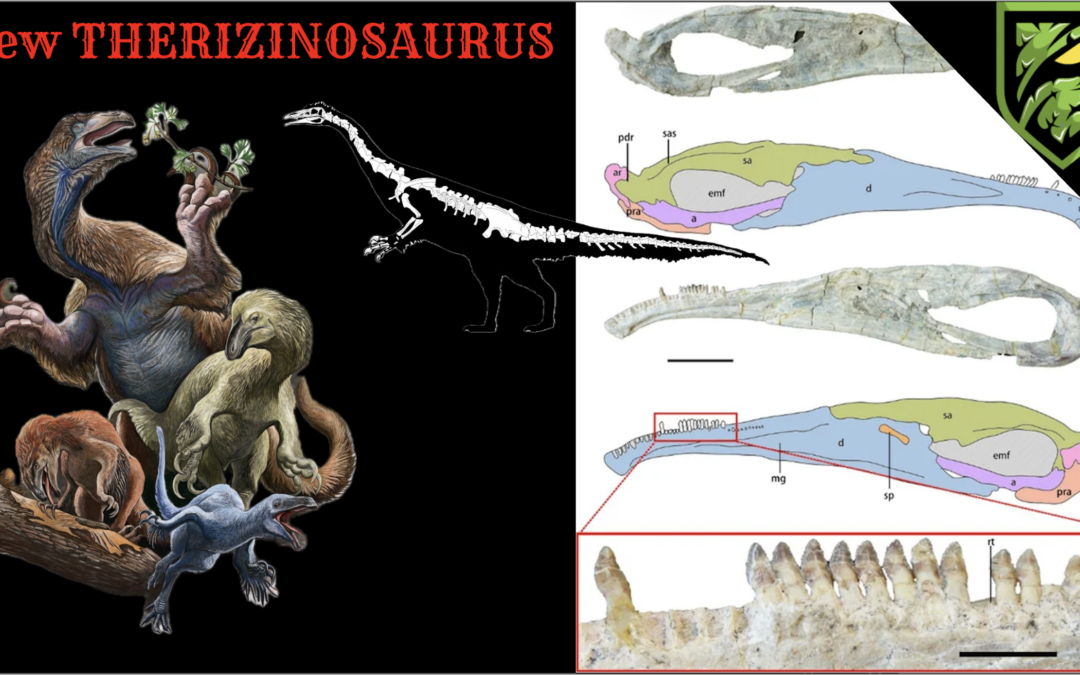
Meet Kayrasaurus changliensis, a newly described therizinosaur from the Early Cretaceous Yixian Formation of western Liaoning, China.
In this episode of the Prehistoric Life Podcast, we’re taking a look at this bizarre new dinosaur and what its discovery can tell us about the evolution and ecology of early therizinosaurs.
The specimen is particularly interesting because it is nearly complete and skeletally immature, yet was already substantially larger than other therizinosaurs known from the same Jehol ecosystem. The researchers estimate that Kayrasaurus was at least 1.6 times larger than Beipiaosaurus inexpectus, the next-largest therizinosaur from the same ecosystem.
We’ll look at:
🦖 What Kayrasaurus changliensis was
🦴 Where it was discovered
🦷 Its unusual, extremely small and densely packed teeth
🦕 Its unusual neck vertebrae and hand claw anatomy
🌎 How it fits into the famous Jehol Biota
🍃 Possible differences in ecological niches between early therizinosaurs
🧬 What this discovery tells us about therizinosaur evolution
🔬 And why the researchers emphasize that more fossils and analyses are still needed to test these ideas
One of the really fascinating parts of this research is that the authors provisionally identify different ecological strategies among Jehol therizinosaurs. Beipiaosaurus and possibly Kayrasaurus show features associated with greater bite force and a more robust, less cursorial body plan, while Jianchangosaurus and Lingyuanosaurus show characteristics associated with greater cursoriality and forelimb-based foraging.
As always, it’s important to distinguish between what the fossils directly show and what researchers are interpreting from them. The authors specifically note that additional analyses and more complete specimens will be necessary to rigorously test and refine these ecological hypotheses.
🔬 READ THE SCIENTIFIC PAPER
The research was published in the Journal of Systematic Palaeontology, a scientific journal specializing in paleontological systematics, including taxonomy, phylogenetics, functional morphology, evolution, and paleoecology.
“A new therizinosaur from the Early Cretaceous Jehol Biota and ecomorphological patterns among early therizinosaurians” — Liao et al. 2026
Journal: Journal of Systematic Palaeontology
Volume: 24
Issue: 2
Article: 2710287
DOI: 10.1080/14772019.2026.2710287
🦖 HELP BRING PREHISTORIC LIFE TO SOUTH CAROLINA!
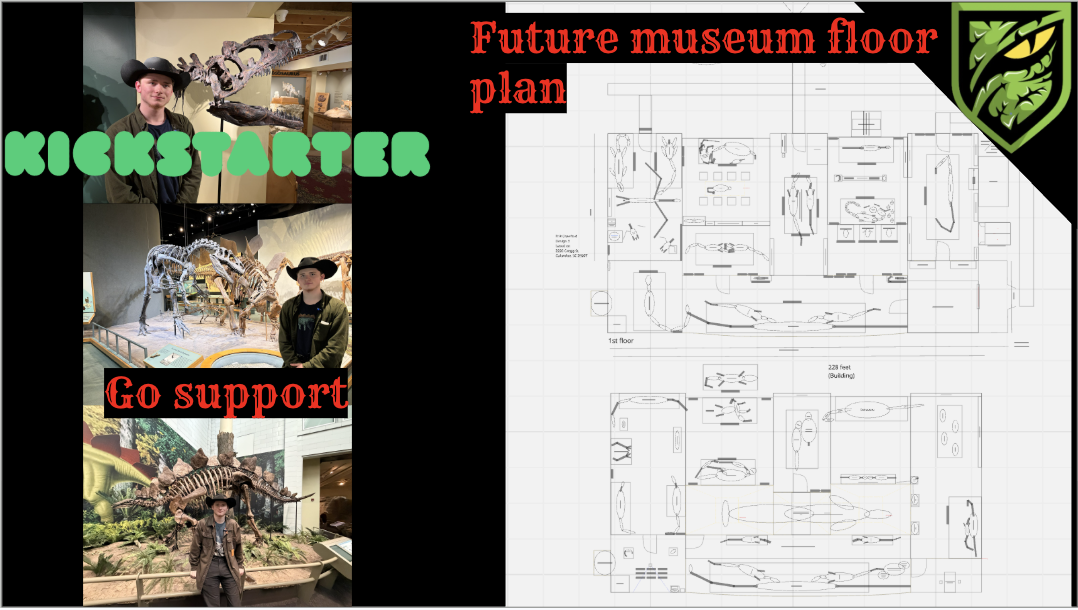
I’m also currently working toward something much bigger: creating a natural history and paleontology museum in South Carolina.
To help make that vision a reality, I’m currently running a Kickstarter to fund the first major physical exhibit for the project—a full-scale dynamic scene featuring an Allosaurus jimmadseni pursuing a juvenile Stegosaurus.
The goal is to create an exhibit that can eventually be displayed in the future museum, while also being transportable for educational events and public outreach along the way.
Even if you can’t donate, sharing the campaign helps tremendously.
🦕 Help Bring Prehistoric Life to South Carolina:
Support the Kickstarter
Every contribution helps move this project one step closer to becoming a reality.
🎙️ PREHISTORIC LIFE PODCAST
Exploring the past. Discovering the science. Bringing prehistoric life to you.
If you enjoy dinosaur discoveries, fossils, paleontology research, museum projects, and prehistoric life, subscribe to Prehistoric Life and join me for the next discovery!
🏛️ WHAT WOULD IT TAKE TO TURN AN OLD SCHOOL BUILDING INTO A NATURAL HISTORY MUSEUM?In this episode of the Prehistoric Life Podcast, I’m taking you inside my current vision for a future natural history and paleontology museum in the Bull Street District of Columbia, South Carolina.For years, I’ve talked about my goal of creating a museum where people can experience dinosaurs, fossils, geology, and the incredible history of life on Earth. But one of the biggest questions has always been:What would the museum actually look like?Today, I’m revealing my three-stage floor plan and development concept for transforming an old school building into a future museum.Instead of trying to build everything at once, this plan looks at how the museum could potentially grow in stages—starting with the first exhibits and eventually expanding into a larger experience filled with prehistoric life, fossils, educational opportunities, and more.🦖 In this episode, I discuss:• The old school building I’m envisioning for the project• Why the Bull Street District could be an exciting location• My three-stage approach to developing the museum• How the floor plan could evolve as the project grows• Potential exhibit spaces and future expansion• My vision for dinosaurs, fossils, geology, and natural history• And how this could eventually become a major destination for prehistoric life in South CarolinaThis is still a vision and developing plan, but I wanted to share how I’m thinking about taking this dream from an idea and turning it into something that could potentially grow step by step.🦴 SHOUTOUT TO MEGA CROC!A huge shoutout to Mega Croc for being part of the inspiration and conversation surrounding dinosaur displays, museums, and the incredible world of prehistoric life!Be sure to check out Mega Croc’s YouTube channel:Mega Croc on YouTube🦖 HELP BUILD THE FIRST EXHIBIT!I’m also currently raising support for the first physical exhibit in this larger museum journey: a full-scale dynamic scene featuring an Allosaurus jimmadseni pursuing a juvenile Stegosaurus.This exhibit is intended to be transportable, allowing it to potentially be used for educational events and public appearances as the larger museum vision continues to develop. The Kickstarter campaign is seeking roughly $15,000 toward construction and related costs.👉 Support the Kickstarter here: https://www.kickstarter.com/projects/palmettopaleonmuseum/help-bring-prehistoric-life-to-south-carolina?ref=d54almHelp Bring Prehistoric Life to South CarolinaEven if you can’t contribute financially, sharing the campaign helps tremendously!Every museum has to start somewhere.This is my plan to start.🎙️ Prehistoric Life PodcastExploring the past. Discovering the science. Bringing prehistoric life to you.#Paleontology #Dinosaurs #NaturalHistoryMuseum #Museum #MuseumFloorPlan #DinosaurMuseum #BullStreetDistrict #ColumbiaSC #SouthCarolina #PrehistoricLife #PrehistoricLifePodcast #Allosaurus #Stegosaurus #Kickstarter #MegaCroc #Fossils #NaturalHistory